Featured Play
Google Block Breaker
This embedded version is playable on-site. Use the button to open the official Google page.
Google Block Breaker is a classic brick-breaker game with modern polish. Control the paddle, bounce the ball, and clear colorful blocks while chasing streaks, combos, and power-ups in a fast, satisfying arcade loop.
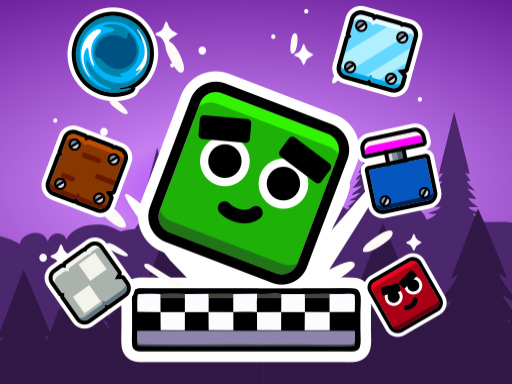
Block Breaker
PlayEmbark on a 2D adventure filled with dynamic physics. Break ice blocks, use springs and portals, and launch the character through the air to reach the goal platform. Master the environment and discover creative ways to complete each level.

Bubble Block Breaker
PlayProve your talent and dexterity in this endless bouncing bubble challenge. Sun, sand, the ocean, and happy bubbles await you in a bright, fast-paced arcade loop.

Block Breaker
PlayBlock Breaker is an addictive and challenging game with 150 levels. Break all blocks (except solid ones) using white balls, and grab special items to multiply balls or expand the paddle.

Block Breaker
PlayBlock Breaker is a casual and very fun game. Break all the blocks in each level to collect points and advance. Collect power-ups to smash more blocks and grow your paddle.
Trending Now
View more








Google Block Breaker Overview
Google Block Breaker is a modern take on the classic brick breaker arcade loop, built inside Google Search as a playful easter egg. Many players discover it by searching for google block breaker or block breaker google, then tapping the Play card that appears in the results. The experience is quick to start, easy to understand, and surprisingly deep once the ball speed ramps up. You move a paddle along the bottom of the screen, bounce a ball upward, and clear colorful blocks before the ball slips past your paddle. Each hit feels crisp, and the game keeps a satisfying tempo that encourages one more run.
Depending on region and language, people refer to the same game using different phrases such as block breaker de google, google doodle block breaker, and block breaker google doodle. No matter the name, the core idea is consistent: a minimal, focus-friendly brick breaker with bright colors, clean audio cues, and tight control. This page collects the playable entry point, rules, and tips so you can enjoy the google block breaker game without hunting through search results every time.
The charm of Google Block Breaker is its balance between nostalgia and polish. It feels familiar if you grew up with classic block breaker cabinets, yet it plays smoothly on modern devices. The rules are simple enough for quick sessions, but the skill ceiling is high. Subtle paddle adjustments change the ball angle, and the best scores come from calm, controlled timing. If you want a satisfying arcade loop that rewards precision, this is exactly the kind of game that keeps you coming back.
This page embeds a fully playable on-site version and also provides a direct link to the official Google page. Because the official game is hosted on a Google domain, the Open in Google button is visible above the play window for convenience. Whether you call it google block breaker, block breaker google, or google doodle block breaker, you will land on the same fast, minimal, and polished arcade loop. Use this guide as a reference for the google block breaker game and as a quick launch point when you want a short, skill-focused break.
Google Block Breaker Search Focus
Google Block Breaker is the headline arcade loop, and this Google Block Breaker hub keeps Google Block Breaker basics, Google Block Breaker controls, and Google Block Breaker tips in one place. When you want Google Block Breaker on desktop or mobile, this Google Block Breaker page helps you start Google Block Breaker quickly and stay in Google Block Breaker rhythm. Use the Google Block Breaker guide to understand Google Block Breaker flow, and return to Google Block Breaker whenever you need a quick break.
Google Block Breaker fans often search for Google Block Breaker rules, Google Block Breaker levels, and Google Block Breaker power-ups, so the Google Block Breaker section below answers those questions. If you compare Google Block Breaker strategies, this Google Block Breaker guide highlights safe angles, and Google Block Breaker also rewards calm timing. Google Block Breaker players can use Google Block Breaker practice runs to build consistency, and Google Block Breaker scores rise with steady focus.
Google Block Breaker is the featured game, but the site is broader: after Google Block Breaker, explore other titles, then come back to Google Block Breaker for a fast reset. This Google Block Breaker page also links you to Google Block Breaker on Google through the button above, while keeping Google Block Breaker playable here. Treat Google Block Breaker as your anchor, keep Google Block Breaker in your rotation, and use Google Block Breaker sessions for quick fun. The Google Block Breaker hub is built for quick starts, and Google Block Breaker comfort comes from repetition, so Google Block Breaker becomes a reliable break.
- Google Block Breaker quick start guide.
- Google Block Breaker controls and launch tip.
- Google Block Breaker paddle positioning basics.
- Google Block Breaker angle control reminder.
- Google Block Breaker combo timing note.
- Google Block Breaker level pacing tip.
- Google Block Breaker power-up safety tip.
- Google Block Breaker multi-ball awareness.
- Google Block Breaker score focus.
- Google Block Breaker survival mindset.
- Google Block Breaker smooth movement.
- Google Block Breaker mobile touch tip.
- Google Block Breaker desktop mouse tip.
- Google Block Breaker keyboard nudge tip.
- Google Block Breaker recovery strategy.
- Google Block Breaker high-score routine.
- Google Block Breaker practice plan.
- Google Block Breaker quick session idea.
- Google Block Breaker calm timing cue.
- Google Block Breaker lane opening hint.
- Google Block Breaker last-block patience.
- Google Block Breaker steady rhythm.
- Google Block Breaker fun break.
- Google Block Breaker focus reset.
- Google Block Breaker replay habit.
Core Gameplay Loop
Every round begins with a ball launching from the paddle. Your first goal is survival: keep the ball in play by moving the paddle left and right to meet it at the right moment. Each time the ball hits a block, the block breaks and your score increases. If you chain hits without losing the ball, you build momentum and the game feels faster and more engaging. Losing the ball ends the round, so control always matters more than flashy shots.
Shot shaping is the heart of brick breaker mastery. The same ball can produce wildly different paths depending on where it contacts the paddle. A hit near the paddle edge sends the ball on a steep diagonal, slicing through columns. A hit closer to center produces safer, more vertical rebounds that make it easier to stabilize. Learning to switch between safe shots and aggressive angles is how you clear difficult layouts and keep your streak alive when the field gets tight.
Tempo control is another key skill. New players tend to swing the paddle too far or too fast, which adds extra variance to the ball angle. A calm, measured motion improves consistency. When you see an opening to send the ball into an upper channel, take it, but only if you can recover the return. The best runs combine patience, smart angle choice, and enough restraint to avoid chasing low-probability hits.
Levels, Blocks, and Power-Ups
As the game progresses, block patterns evolve from simple grids into offset rows and layered clusters. Early waves are forgiving and give you time to settle into rhythm. Later waves force you to plan routes and open a vertical lane so the ball can reach upper layers. If you find the ball getting trapped in the lower half, prioritize creating a clean channel so you can clear blocks from the inside out.
Power-ups appear as falling bonuses after certain blocks break. Common effects include widening the paddle, speeding the ball, or spawning an extra ball. Each power-up can be helpful, but not all are safe in every moment. A wider paddle buys stability, while multi-ball accelerates scoring. Faster ball speed adds risk, especially when your timing is not warmed up. The smartest play is to secure the current rally first, then grab bonuses that fit the pace you can control.
A frequent late-game scenario is the “last block” problem. The ball may bounce in an awkward pattern while a single block survives in a corner. Instead of forcing risky shots, stay patient and use micro-adjustments to steer the ball into a better angle. One clean lane is often all you need. Consistency and patience are the most underrated skills in Google Block Breaker, and they matter even more as the game speed increases.
Controls and Technique
On desktop, you can usually control the paddle with a mouse, trackpad, or keyboard, depending on your device and browser. The most stable approach is short, precise movements rather than large swings. Small adjustments help you keep the ball near the center of the paddle, which reduces angle volatility and makes it easier to recover when the ball speeds up.
On mobile, use a light, continuous slide with your finger and avoid covering the ball path. After each return, lift your finger briefly so you can refocus on the ball trajectory and block layout. If the screen is small, keep the paddle centered whenever possible and avoid over-correcting. Smooth input is more valuable than fast input in almost every situation.
Advanced technique involves deliberate angle creation. Edge hits create steep diagonals that carve through stacked blocks, while center hits calm the game and buy time. Try to alternate between a stable phase and a push phase: stabilize the rally, then take a calculated diagonal to clear a dense cluster. If you can repeat that cycle, your score will climb steadily without a dramatic increase in risk.
Advanced Patterns and Route Planning
Once you can keep the ball alive consistently, start reading the board like a route map. Identify the thinnest vertical path to the upper rows and focus your next few returns on opening that lane. A clean channel lets the ball travel deep into the field, where it can break multiple blocks per bounce. This is the fastest way to clear dense layouts and keeps the game from stalling in the lower half. Think of each rally as a short plan: open a lane, enter the lane, then sweep across a wide area before returning to safety.
A useful habit is the two-bounce plan. Before you strike the ball, ask where it will land after the next two contacts. If the answer is unsafe, choose a calmer angle and reset. If the answer is promising, commit to a sharper hit and let the ball run. This mental check reduces panic and keeps you from chasing a low-odds shot. It also makes it easier to time power-up pickups because you can predict where the ball will be while a bonus is falling.
The best players also know when to slow the game down. A center hit can flatten the trajectory, buying time to reposition. A wider paddle, when available, should be used to stabilize before attempting another risky diagonal. If you feel the rally drifting out of control, deliberately aim for safe, repeatable returns to rebuild confidence. This is not playing timidly, it is making space for the next decisive shot. Strong route planning is a cycle of attack, stabilize, and attack again.
Scoring, Combos, and Strategy
Scoring is driven by block breaks and combo streaks. The longer your ball stays alive while breaking blocks, the more value each hit can generate. If you can keep the ball in the upper half of the screen, you often get faster block clears and more bonus drops. This creates a positive loop: better angles lead to more breaks, more breaks lead to more bonuses, and more bonuses lead to longer survival.
Strategy is less about speed and more about intent. Use the early moments of a round to set up a clean channel. Once the ball is traveling through an open lane, you can score rapidly without fighting the lower blocks. If a risky shot might cost the rally, delay it until you have a power-up cushion such as a wider paddle or multi-ball. The best players think two or three bounces ahead, not one.
When the ball speed increases, feel becomes more important than vision. Reduce your focus area and center your attention on the landing point of the ball relative to the paddle. This helps your hands develop a reliable rhythm. A steady rhythm produces long sessions and higher totals, which is why consistency is the defining trait of high-scoring runs.
Practice Plan for New Players
If you are new to the google block breaker game, set simple goals and track them over time. Start with survival, then layer in angle control, then layer in power-up timing. You do not need long sessions to improve; short, focused practice builds better muscle memory.
- Play 10 minutes a day focusing only on clean, centered returns.
- Land one deliberate diagonal shot into an upper lane each session.
- Record your longest streak and try to beat it gradually.
- Practice catching power-ups only after the rally is stable.
Mindset, Focus, and Session Design
Brick breaker games reward calm decision-making. If you feel rushed, your paddle movement becomes exaggerated and the ball angle gets volatile. A simple fix is to set a rhythm: breathe on each return, keep your hands relaxed, and treat every bounce as a chance to reset. This small mental cue reduces panic and helps you see openings that were easy to miss when you were reacting too fast. Even short sessions feel smoother when you approach them with the mindset of control first, speed second.
For longer improvement, structure your sessions. Start with one warm-up round where the only goal is survival. Then play a round focused on creating an upper lane, and a round focused on power-up timing. End with a best-effort run. This small routine keeps practice intentional and makes progress easier to measure. If you track just one metric, make it your longest rally time, because time in play is the best predictor of future high scores in Google Block Breaker.
Troubleshooting and Notes
If the embedded play window is blank, the browser may be blocking the iframe because the game is hosted on a Google domain. Use the “Open in Google” button to launch the official page in a new tab. For the smoothest experience, use a modern browser such as Chrome, Edge, or Safari. Browser extensions can also interfere with embedded content, so try disabling ad blockers if you see a blank frame.
- Keep your network stable to reduce input delay.
- Higher refresh-rate screens make timing more forgiving.
- Close heavy background apps to avoid stutter or lag.
- Avoid rapid window switching while playing on low-end devices.
- Allow audio and fullscreen for a complete experience.
- Reopen the game if the ball speed feels inconsistent.
Disclaimer and Copyright
This site provides an embed and a guide for Google Block Breaker for convenience only. The game itself is owned and operated by Google, and the playable experience is governed by the official Google Search page. This site is not affiliated with Google. If the official version changes, the official page should be treated as the source of truth.